One person.
One capacity.
Start with the actual working pattern, employment dates and breaks. A compressed day, a part-time day and a non-working day should not all become an assumed eight hours.
People & planning
A useful plan starts with each person’s working day. Makoshi’s planning prototype connects that capacity to bookings, holds and the detail of the work.
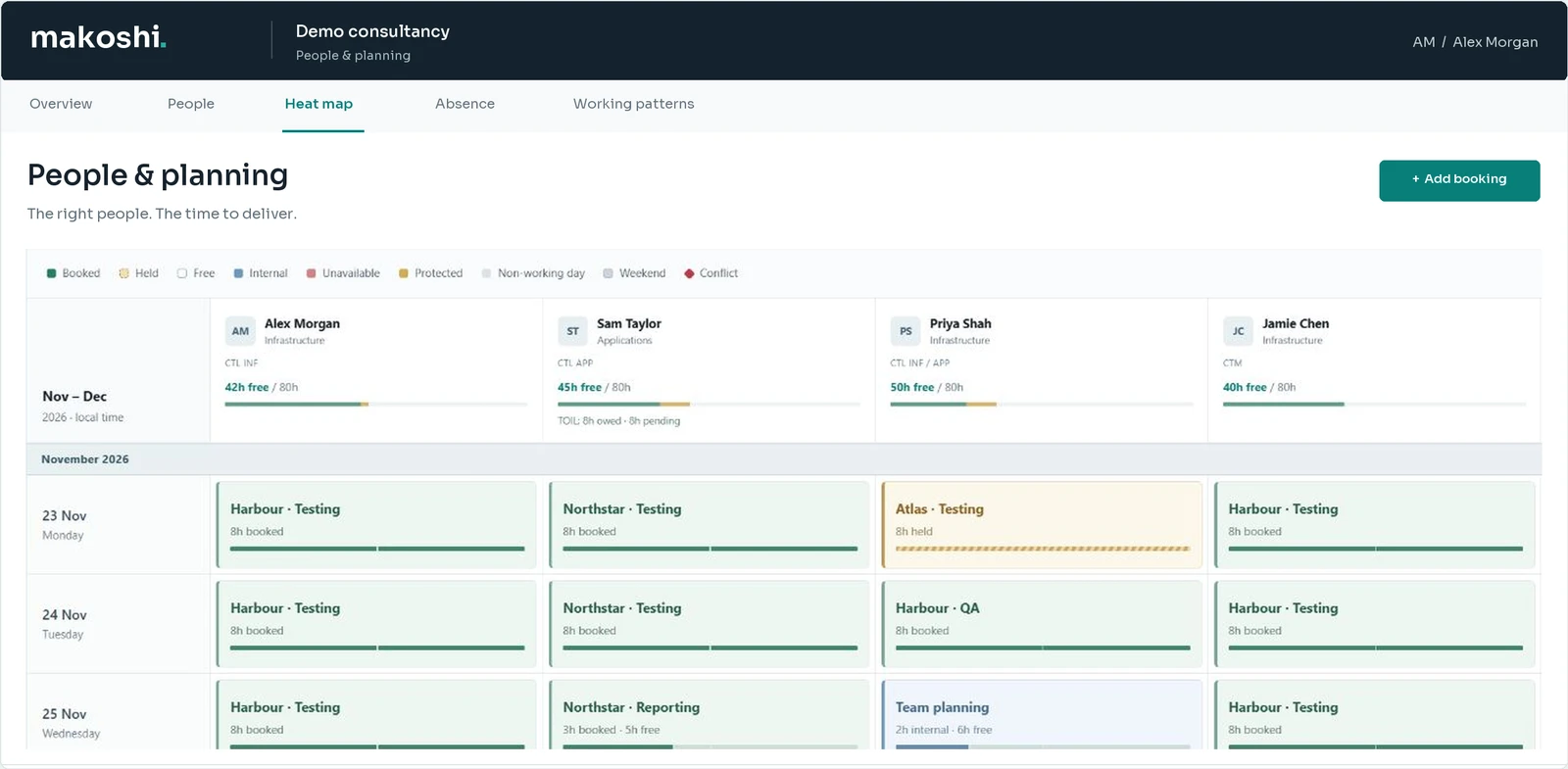
Existing offline prototype · Fictional people, clients and allocations
Start with the actual working pattern, employment dates and breaks. A compressed day, a part-time day and a non-working day should not all become an assumed eight hours.
Keep temporary reservations visible, with their owner and current expiry where applicable. Converting a hold should reuse the reservation.
Keep the team view readable, then open a day to see scheduled hours, bookings, held time and available periods.
Inside the day
The prototype supports hourly planning, bookings around breaks and a full-working-day option. It also demonstrates additional-work capture and TOIL review.
The production application will need shared records, real permissions and concurrent booking checks. Those are separate from the browser-local prototype shown here.
Discuss your planning needs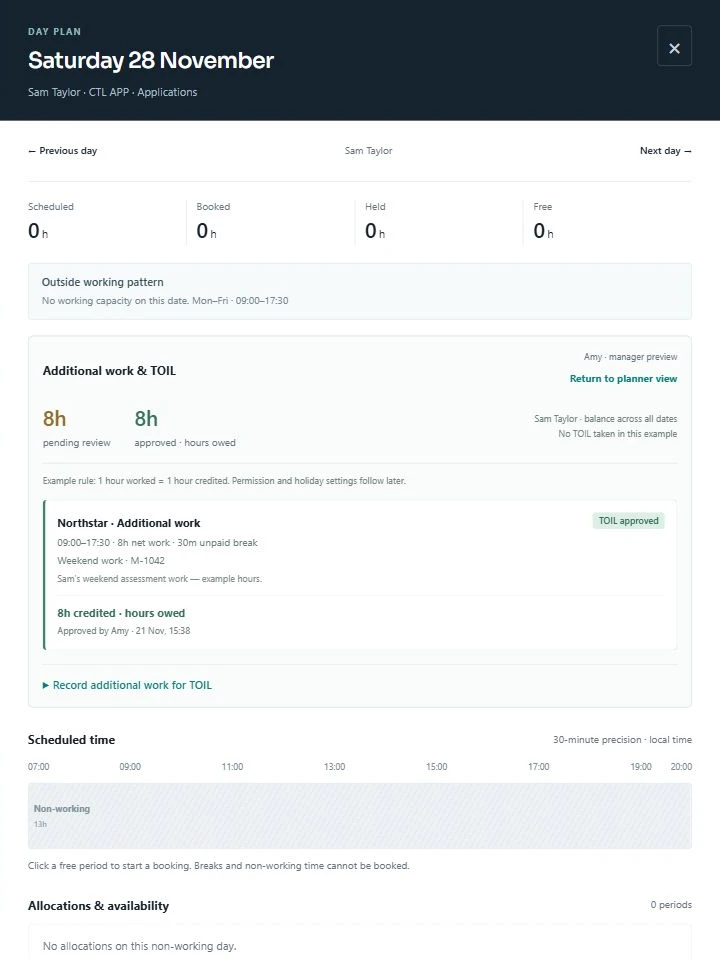
Testing is only part of the capacity conversation. Reporting, QA, retest and other agreed phases need their own place in the plan.
Your people, your projects and your client delivery. Connected.